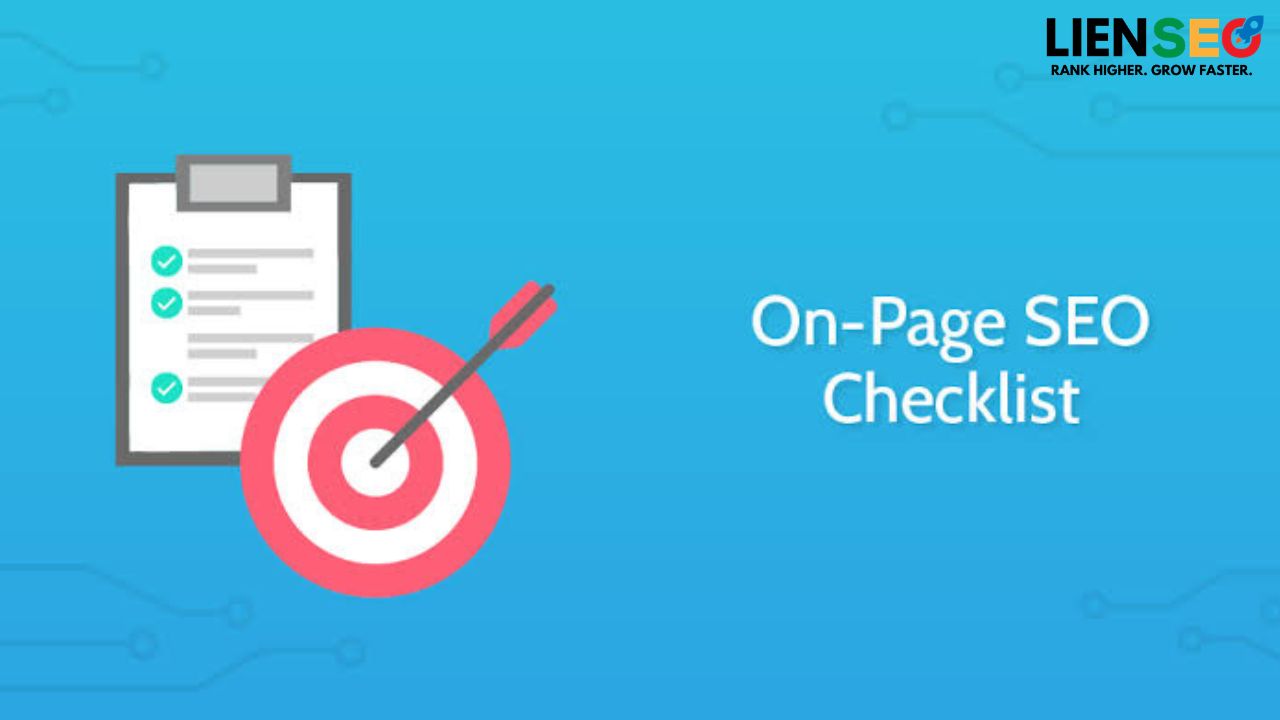
On page SEO checklist 2026 is highly significant in case you want your website or blog to be ranked on Google. On page SEO refers to a tool used to simplify the content and the framework of your webpage to enable the search engine to grasp it easily and place it higher in the search results. Most of them are simply writers who are not interested in improving their articles, and that is why their articles will not rank despite good information being included. On page optimization of SEO entails optimization of titles, headings, keywords, images, links and the general structures of the content. By combining all these factors correctly, Google will be in a better position of knowing the subject of your page and presenting it to the appropriate audience.
Table of Contents
Keywords Research Before Content Writing
The initial exercise in every on page SEO checklist is correct keyword research. You need to identify keywords that people are looking at before you write an article. Relevant search terms can be identified with the help of the tools or hand tools such as Google autocomplete. Newcomers are advised to target long tail keywords as they are simpler to achieve ranking and they are not highly competitive. As soon as you choose a keyword, it must be automatically in your title, headings and content. This will assist the search engines to get information about what you are writing about and are more likely to rank.
Optimizing the Meta Title

One of the most significant aspects of on page SEO is the meta title optimization. Users look at the title of the results in the Google search first, thus, it should be clear, relevant, and contain your primary keyword. An effective meta title must include 50-60 characters that would effectively appear in the search results. It must also make users click on your content. As an illustration, the terms such as guide, checklist, or tips can be used to boost the number of clicks. Optimization of titles will assist the search engines and the user of the content to know the intent of your work.
How to write a Good Meta Description

Metadata is the brief overview that is presented just below the title on the Google search page. Even though it is not a direct ranking factor, it is a significant factor in the increase of click-through rate. A readable meta description must answer what the article is all about and in a natural manner provide the key keyword. The description must be no less than 150-160 characters and must motivate the users to check your page. Having a relevant and interesting meta description will mean that more individuals will tend to click on whatever you have to offer.
Applying Correct Heading Structure (H1 H2 H3)

An outline of the headings is a significant component of on page search engine optimization methods. Each page must only contain a single H1 heading that normally contains the main key word. The H2 heading should be used as subtopics and as a sub-subtopic H3 should be used. The article is easier to read as it is structured in such a way that it is simple to both read as well as to search. The hierarchy of information within the page is also enhanced by organizing the headings structure so that the content is easier to read and Google is able to comprehend the hierarchy of information on the page.
Positioning of Keywords within the Content

Proper placement of key words is very crucial in enhancing on page SEO. The key word must be used naturally in the key sections like title, first paragraph, headings, and conclusion. Nonetheless, an overuse of keywords should be avoided as they may lead to the deterioration of rankings due to the use of keywords that are stuffing. Rather, be natural in the use of related keywords and variations. This assists the search engines to comprehend better the subject matter as well as make the article understandable to the users.
Internal Linking Strategy

The other significant element of a good on page SEO checklist is internal linking. Internal links enable one page of your web site to be linked to another and the users find it easier using your site. They also assist in the searching of the engines to comprehend the connection among the various pages in your site. To illustrate, when you write various articles about the subject of SEO, it will be better to connect them among each other as this will enhance the general design of your site as well as the likelihood of getting ranked with associated words.
Image Optimization and Alternative Text
The pictures are also significant in enhancing the user experience, yet the pictures are to be optimized to search. The inclusion of image alt text allows the search engine to know what the image is all about. Alternative text is to be provided in a short description of the image with the inclusion of key words where possible. Besides alt text, pictures need to be compressed such that they are loaded more quickly. Optimized images enhance the page speed and search appearance.
Optimizing URL Structure
Another major aspect of on page SEO checklist is a clean and simple URL structure. The URLs must be concise, easy to read and contain the main key word. To illustrate, a long and complex URL is not better to use, however a simple one such as /on-page-seo-checklist is. Short URLs facilitate easier navigation by the users as well as the search engines to the page content.
Improving Page Speed
Page speed is a significant ranking element in the present SEO. When a webpage loads slowly, the user can give up before it even loads. Images must be optimized, any extraneous scripts should be reduced and trusted hosting should be used to enhance page speed. Sites that load faster give the necessary experience and are more likely to reach the top of the search engines.
Quality and Optimization of the content
On page SEO checklist is based on high quality content optimization. The content must offer valuable information that includes the answer to the search query of the user. The articles must be properly organized, readable and should be elaborate to exhaust the subject matter. The short paragraphs with headings and the use of examples are useful to enhance readability. Good useful content will enhance the possibility of ranking better on Google provided it is optimized.
Using Schema Markup
Schema markup can facilitate Web searching engines to know more about what you have, which is structured data. This may assist your page to be featured in rich results like featured snippets, star ratings or FAQs. The schema markup would enhance the search visibility and higher likelihood of higher number of clicks in the search result.
Keyword research guide
Conclusion
By adhering to an on page SEO checklist 2026, it is likely that you will be able to boost your likelihood of ranking your material on Google. You can simplify the search engines by optimizing titles, headings, keywords, images and internal links so that the search engines can easily comprehend what is going on on your site. Meanwhile, the emphasis on the quality of content and user experience would make sure that users do not leave your site in a hurry. Page SEO is one of the most crucial learning processes to page builders and beginners as they work towards an effective website.
FAQs
What is on page SEO?
On page SEO checklist is the maximization of the contents of a webpage, titles, headings and the links to enhance rankings in search engines.
Why is on page SEO important?
Page SEO assists the search engine to learn more about your content and the likelihood of appearing higher on the search results list.
Which factors of on page SEO are of the most importance?
The location of keywords, optimization of meta title, page structure, internal links, page speed, and quality of the content are some of these important factors.
What is the time span of realizing the on page SEO?
The time taken to achieve the results of SEO is normally a few weeks or few months according to competition, content and the general website authority.
The Ultimate On-Page SEO Checklist for 2026: Rank Higher & Get More Traffic
on page SEO checklist 2026
on page SEO checklist
on page SEO optimization
on page SEO techniques
on page SEO for beginners
website on page SEO
blog post SEO checklist
on page SEO guide
improve on page SEO
on page SEO tips
SEO optimization checklist
Google ranking on page SEO
meta title optimization
meta description
H1 H2 H3 headings
keyword placement
internal linking
image alt text
URL structure
page speed
content optimization
schema markup
2 thoughts on “On Page SEO Checklist (2026): Guide to Optimization Step-by-Step”